
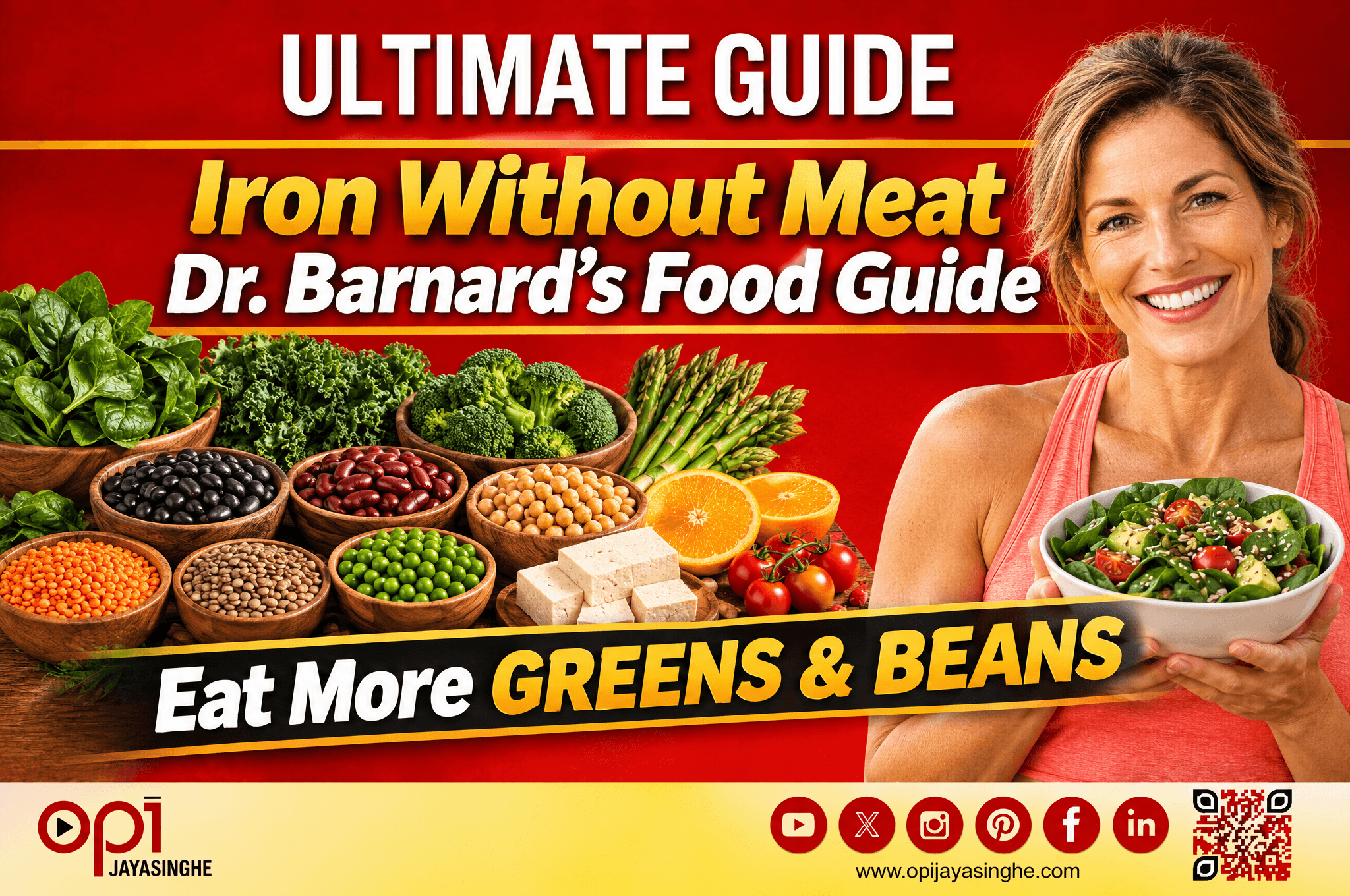
If you’ve ever told someone you eat plant-based, you’ve probably heard it: “But where do you get your iron?” A recent Washington Post article added fuel to that question by listing meat, poultry and seafood as the best sources of iron, and leaving plant foods almost entirely out.
In a recent episode of The Exam Room podcast, Dr Neal Barnard, founder and president of the Physicians Committee for Responsible Medicine, answered that question directly. His short answer is “greens and beans”. His longer answer explains why getting iron from plants may be the safer choice.
Below is a breakdown of the foods Dr Barnard recommends, the ones he says to limit, and the key numbers worth knowing. I’ve also put everything on a free one-page PDF you can download and stick on your fridge.
👉 Download the free one-page PDF: Iron Without Meat
Why Is Iron a “Double-Edged Sword”?
Iron is essential. Your body needs it to carry oxygen in your red blood cells and to run a range of enzyme reactions. But Dr Barnard’s main point is that more is not better.
Iron Oxidises Inside Your Body
He uses a simple example. Leave a cast-iron pan outside in the rain overnight and it rusts. The iron in your bloodstream oxidises in a similar way, releasing free radicals that can damage your body.
Too Much Iron Is Linked to Serious Disease
People with hemochromatosis, a genetic condition that causes iron build-up, have much higher rates of heart disease and Alzheimer’s disease. Dr Barnard says that people without the condition who eat a lot of red meat and accumulate iron also face higher risks of colorectal cancer, heart disease and Alzheimer’s.
He also points to research from Johns Hopkins and Duke University, where people with more iron accumulation in the brain had a higher risk of developing Alzheimer’s later on.
What Is the Difference Between Heme and Non-Heme Iron?
This is the key to the whole discussion.
Heme Iron (Meat)
Heme iron is found in meat. It is readily absorbed whether you need it or not. Even if your iron stores are already full, it still comes in.
Non-Heme Iron (Plants)
Non-heme iron is found in plants. Your body absorbs more when you’re low and less when you’re full. Dr Barnard describes this as a natural protection against iron overload. He also notes that plant iron is not associated with colorectal cancer or the other problems linked to excess iron.
And as he points out, the cow doesn’t make iron. It gets it from grass. You can go straight to the source.
Which Plant Foods Are the Best Sources of Iron?
Dr Barnard’s advice is to “think green” and then add beans.
1. Green Leafy Vegetables
He ranks greens “a notch up” from beans. They provide roughly 3 mg of iron per serving and almost zero calories, which makes them the best pick if you’re also watching your weight.
- Spinach (its iron is well absorbed, unlike its calcium)
- Kale
- Broccoli
- Asparagus
2. Legumes
Beans, peas and lentils provide around the same amount of iron per serving. Dr Barnard says “they’re all fine”, so the most important thing is making them a regular part of your routine.
- Black beans and pinto beans (his personal favourites)
- Kidney beans (slightly higher in iron)
- Black-eyed peas and chickpeas
- Lentils and split peas
- Green peas
- Bean products such as tofu and hummus
3. Vitamin C Foods
Eating some vitamin C with your iron-rich foods increases absorption. A glass of orange juice with your tofu scramble or bean burrito is an easy way to do it. Tomatoes in your scramble help too.
4. Whole Grains Paired With Beans
Dr Barnard calls grains and beans “a combination made in heaven”. Think pasta e fagioli, a bean burrito or simply beans on toast.
What Does an Iron-Rich Plant-Based Day Look Like?
Here’s a simple day built from the foods discussed in the episode:
| Meal | Ideas |
|---|---|
| Breakfast | Tofu scramble with water-sautéed spinach and tomatoes, plus a glass of OJ. Or a bean burrito, or beans on toast. |
| Lunch | Split pea soup, three-bean salad, or chickpea salad with hummus and greens. |
| Dinner | Lentil dal, black or pinto bean dishes, pasta e fagioli, or pasta with green peas and nutritional yeast, served with broccoli or kale. |
What Should You Limit or Avoid?
According to Dr Barnard, these are the ones to watch:
- Red meat: heme iron is absorbed whether you need it or not.
- Liver and organ meats: high in iron and cholesterol. He describes eating liver as “like eating the filter on your air conditioner”.
- Cooking in cast iron every day: iron leaches into your food, especially acidic dishes. Occasional use is fine. Otherwise, “hang it on the wall” as decoration.
- Iron-fortified foods: only if a blood test shows you’re actually low.
- Multivitamins with iron or copper: if you take a multivitamin, choose one without iron and without copper.
How Much Iron Do You Actually Need?
- Men: about 8 mg per day
- Women in their reproductive years: about 18 mg per day (the difference is due to monthly blood loss)
You’ll often hear that vegans need 80% more iron because plant iron is less absorbable. Dr Barnard’s advice for the average person with no symptoms is to ignore it. If you’re eating greens and legumes regularly and your blood tests look good, you’re getting what you need.
Understanding Ferritin
Ferritin is your stored iron. If your doctor checks it, above 30 is generally considered the healthy range. Dr Barnard stresses that higher is not better. Sitting in the lower-to-middle part of the normal range is ideal, because high stored iron is like “having higher stored dynamite”.
What If Your Iron Is Low?
Before reaching for a steak or an iron supplement, Dr Barnard says the first question should be why you’re low. Common reasons include:
- Heavy menstrual periods (his team’s research found a low-fat vegan diet may reduce flow)
- Blood loss from the digestive tract, such as ulcers or colorectal cancer
- Endurance training, such as marathon running
If you do need more iron, he recommends it come from plant sources.
Frequently Asked Questions
Can you get enough iron on a plant-based diet?
Yes. According to Dr Barnard, regularly eating green leafy vegetables and legumes provides the iron your body needs.
Do I need to pair vitamin C with iron-rich foods?
You don’t have to, but it helps. Vitamin C improves iron absorption, so adding citrus, orange juice or tomatoes to your meals is an easy win.
Which beans are highest in iron?
They vary a little, and kidney beans are on the higher side. But Dr Barnard says any bean is fine as long as beans are part of your routine.
Should I take a multivitamin with iron?
Dr Barnard recommends choosing a multivitamin without iron and without copper, unless your doctor has confirmed you need iron.
Do I need anything else on a plant-based diet?
Yes. Take a vitamin B12 supplement. Dr Barnard says anyone following a plant-based diet should supplement B12 for healthy nerves and blood.
Conclusion
Iron matters, but the message from Dr Neal Barnard is clear: you don’t need meat to get enough, and plant iron comes with a built-in safety switch that meat doesn’t have. Fill your plate with greens and beans, add a little vitamin C, take your B12, and if your iron is ever low, find out why before changing anything.
If you’re building a plant-based diet, you might also like my posts on Dr Greger’s Daily Dozen, Dr Greger’s Anti-Aging 8 tips and the Ultimate Guide to the Healthiest Green Smoothie.
👉 Download the free one-page PDF: Iron Without Meat
If you found this helpful, please share it with someone who keeps asking where you get your iron. And if you have any questions, feel free to send me a message.
Source: How to Get Enough Iron Without Eating Meat | Dr. Neal Barnard, The Exam Room podcast, Physicians Committee. This article summarises the views shared in the video and is not medical advice. Please speak with your GP before changing your diet or supplements.
